
Meet the Saints

St. James the Greater - The Apostle Who Inspired the World's Greatest Pilgrimage
Every year, hundreds of thousands of people lace up their boots, shoulder a backpack, and begin walking across the countryside of Spain. Some walk for adventure. Some seek healing. Some are searching for God. Others simply hope to discover themselves. Their destination is the magnificent Cathedral of Santiago de Compostela, where Christian tradition holds that the remains of St. James the Greater have rested for more than twelve centuries. Yet the Camino de Santiago is about far more than reaching a destination. It is about following the example of an ordinary fisherman who answered Christ's call, devoted his life to proclaiming the Gospel, and ultimately gave everything for his faith. St. James reminds us that every journey with Christ begins with a single step.

Who Was James, Son of Zebedee?
James was born in Galilee and worked alongside his father, Zebedee, and his younger brother John as fishermen on the Sea of Galilee. Like Simon Peter and Andrew, James earned his living on the water. Life was demanding. Fishing required patience, endurance, and hard work. James likely expected to spend his entire life on the lake. Instead, one encounter with Jesus changed everything.
As Christ walked along the shore, He called James and John to leave their nets and become "fishers of men." Without hesitation, they left their boats, their livelihood, and even their father to follow Him. Their greatest adventure had begun.

Sons of Thunder
Jesus gave James and John an unforgettable nickname:
Boanerges, meaning "Sons of Thunder."
The name hints at their passionate personalities. At one point, they even asked Jesus if they should call down fire from heaven upon a Samaritan village that had rejected Him. On another occasion, they asked for places of honor beside Christ in His Kingdom. James was bold. Impulsive. Ambitious. Like Peter, he was still learning what true discipleship looked like. Jesus patiently shaped that fiery enthusiasm into courageous faith.

Walking with Christ
James belonged to Jesus' closest circle of disciples. Along with Peter and John, he experienced moments that no other Apostles were privileged to witness. Day after day, he walked beside Christ, listening to His teachings, watching His miracles, and learning firsthand what it meant to become a true disciple.
James stood beside Jesus at the raising of Jairus' daughter, where he witnessed Christ's power over death itself. He was also present at the Transfiguration, when Jesus revealed His divine glory on the mountaintop and spoke with Moses and Elijah. These extraordinary encounters left no doubt in James' mind that Jesus was far more than a gifted teacher—He was the long-awaited Messiah and the Son of God.
Later, James accompanied Jesus into the Garden of Gethsemane on the night before the Crucifixion. There he witnessed Christ's sorrow and complete surrender to the Father's will. From moments of overwhelming joy to moments of profound suffering, James learned that following Christ meant trusting God through every season of life. Those experiences would prepare him for the courage and perseverance he would need as one of the leaders of the early Church.
Proclaiming the Gospel
Following Christ's Resurrection and Ascension, James joined the other Apostles in proclaiming the Good News with boldness and conviction. The same disciple who had once sought positions of honor now dedicated his life to serving Christ and building the early Church.
Ancient Christian tradition holds that James traveled beyond the Holy Land to preach the Gospel in what is now Spain. While historians continue to debate the details of these missionary journeys, his enduring connection to Spain has inspired the faith of countless generations and remains at the heart of the Camino de Santiago.
Eventually, James returned to Jerusalem, where opposition to the growing Christian movement intensified. His fearless preaching attracted the attention of King Herod Agrippa, setting the stage for the final witness of his life.
James' missionary zeal reminds us that faith is never meant to be kept to ourselves. Every Christian is called to carry the Gospel into the world, trusting that God can use ordinary people to accomplish extraordinary things.
The First Apostle to Give His Life
During the Middle Ages, the Camino de Santiago became one of the three great Christian pilgrimages, alongside Rome and Jerusalem. Pilgrims crossed mountains, forests, villages, and rivers, often walking hundreds of miles. Many carried little more than faith, determination, and hope.
Today, the Camino continues to attract people from every nation and every walk of life. Its yellow arrows and scallop shell symbols have become internationally recognized signs pointing pilgrims toward Santiago. For many, the Camino becomes far more than a hike. It becomes a journey of spiritual renewal.
From Jerusalem to Santiago
According to ancient Christian tradition, disciples carried James' remains from Jerusalem across the Mediterranean Sea to the northwestern coast of Spain. His tomb eventually became forgotten. Centuries later, tradition tells us it was miraculously rediscovered after mysterious lights appeared over a field.
The site became known as Campus Stellae—the "Field of the Star."
From those words came the name Compostela.
Whether drawn by history, faith, or tradition, pilgrims have traveled there for more than a thousand years. Today, the Cathedral of Santiago de Compostela remains one of Christianity's most important pilgrimage destinations.
The Camino Begins

During the Middle Ages, the Camino de Santiago became one of the three great Christian pilgrimages, alongside Rome and Jerusalem. Pilgrims crossed mountains, forests, villages, and rivers, often walking hundreds of miles. Many carried little more than faith, determination, and hope. Today, the Camino continues to attract people from every nation and every walk of life. Its yellow arrows and scallop shell symbols have become internationally recognized signs pointing pilgrims toward Santiago. For many, the Camino becomes far more than a hike. It becomes a journey of spiritual renewal.
Interesting Facts About St. James
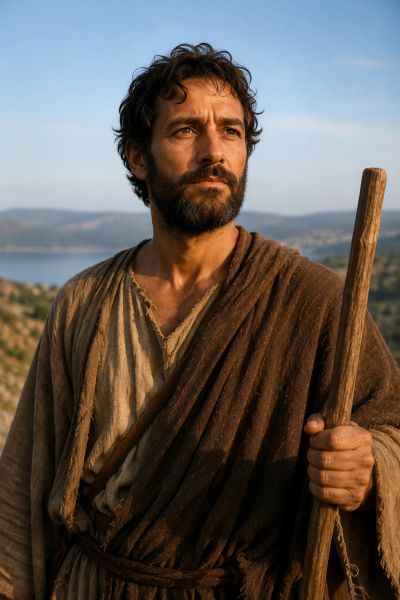
He Was One of Jesus' First Apostles
James was among the earliest disciples called by Christ along the Sea of Galilee.
He Witnessed the Transfiguration
Only Peter, James, and John were present when Jesus revealed His divine glory on Mount Tabor.
He Was the First Apostle Martyred
James became the first of the Twelve Apostles to die for the Christian faith.
He Is the Patron Saint of Pilgrims
For centuries, Christians have looked to St. James as the protector of those journeying in faith.
Millions Walk in His Footsteps
The Camino de Santiago remains one of the world's most famous pilgrimage routes, drawing pilgrims from every continent.
Did You Know?
- The famous scallop shell became the universal symbol of the Camino de Santiago.
- The Camino has been walked continuously for over one thousand years.
- Pilgrims traditionally receive a "Compostela" certificate upon completing the required distance.
- Santiago de Compostela is a UNESCO World Heritage Site.
- July 25 is celebrated each year as the Feast of St. James.
Lessons from St. James
St. James reminds us that discipleship is a journey. He began as an ambitious fisherman eager for recognition. Over time, Christ transformed him into a courageous apostle willing to give everything for the Gospel.
Faith is rarely perfected overnight. Like James, we grow through daily encounters with Christ, learning humility, perseverance, and trust one step at a time. Every pilgrimage mirrors that same journey. One faithful step eventually becomes a life transformed.
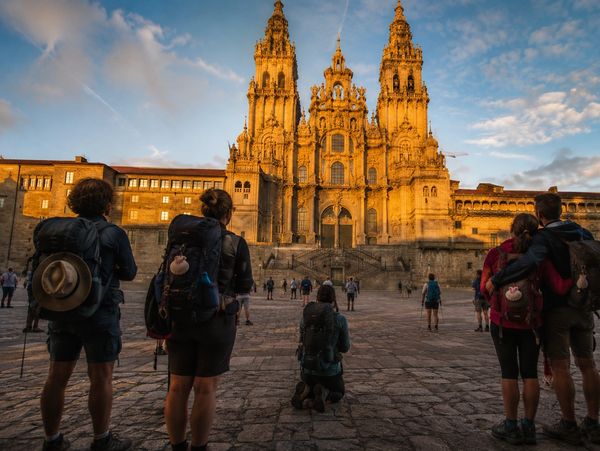
Pilgrim's Connection
Few experiences capture the spirit of Christian pilgrimage more beautifully than walking the Camino de Santiago. Whether traveling the final 100 kilometers or embarking on a much longer route, pilgrims follow paths that have drawn believers toward the tomb of St. James for centuries.
The Cathedral of Santiago de Compostela stands not simply as the end of a trail, but as a reminder that every earthly pilgrimage points toward our ultimate destination—life with Christ. Like St. James, pilgrims discover that the greatest rewards are often found not at the finish line, but in the transformation that takes place along the journey.